

Regulatory Background and Licensing
When you trade crypto, regulation is your first line of defense against scams and fraud. COEXSTAR stands out because it didn’t operate in the shadows. It obtained its license from the Bangko Sentral ng Pilipinas (BSP) on March 21, 2019. This specific authorization allows the company to engage in virtual currency-related activities under strict oversight. Most exchanges simply claim compliance; COEXSTAR had to pass rigorous checks to get this license. The delay between receiving the license in March and launching in October 2019 wasn’t due to technical glitches. Company officials stated they used that time for extensive security verification. They hired Nullforge Security Inc., a third-party auditor, to ensure their systems met BSP requirements. This proactive approach suggests a commitment to safety over speed, which is rare in an industry where many platforms rush to market to capture hype. For users in the Philippines, this means COEXSTAR adheres to local Anti-Money Laundering Council (AMLC) rules. You won’t find anonymous accounts here. The platform enforces Know Your Customer (KYC) procedures. While some privacy advocates dislike KYC, it’s a crucial feature for legitimacy. It ensures that the exchange isn’t being used for illicit activities, protecting both the platform and its users from legal repercussions.
Security Measures and Asset Protection
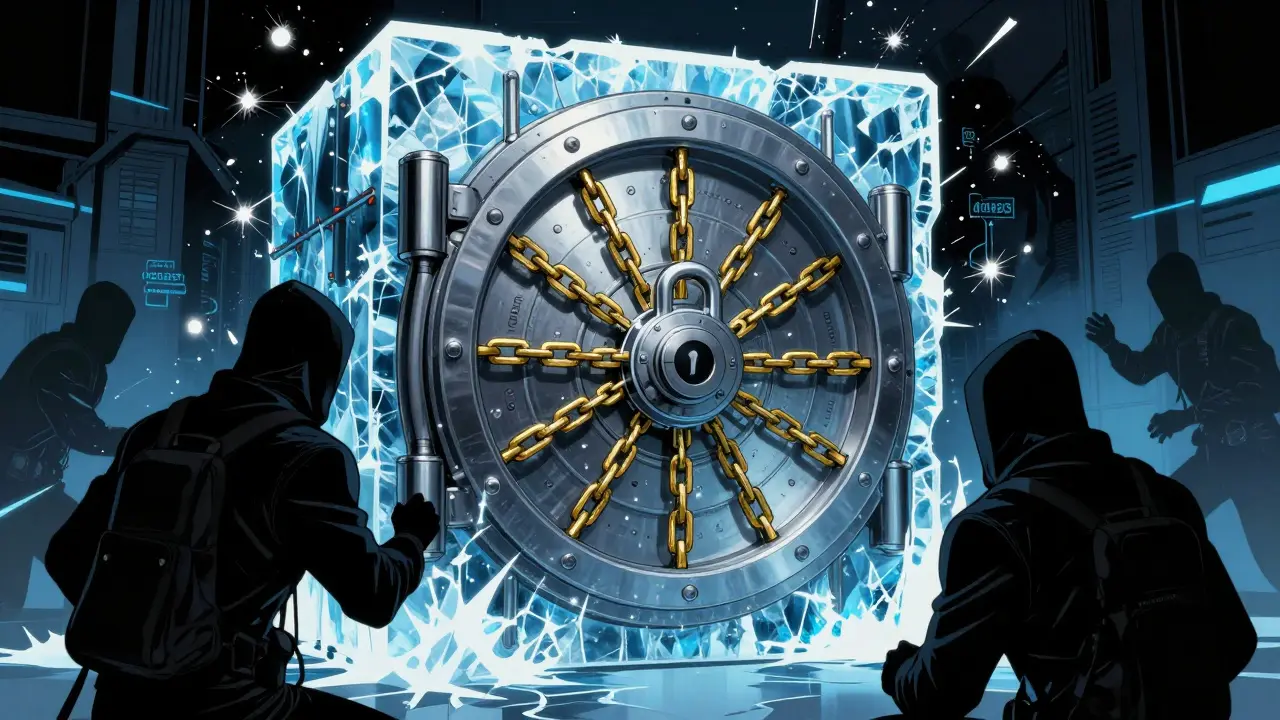
Security isn’t just a buzzword; it’s the core product of any crypto exchange. In 2023 alone, hackers stole $2.38 billion in cryptocurrency globally. By 2024, North Korean hacking groups had escalated their attacks, stealing $1.34 billion across 47 incidents. Given this threat landscape, how does COEXSTAR protect your funds? The platform employs several industry-standard security layers:
- Cold Storage: The majority of user funds are kept in offline wallets. Cold storage keeps assets away from internet-connected systems, making them immune to remote hacking attempts. Only a small fraction of funds remains in hot wallets for immediate withdrawals.
- Two-Factor Authentication (2FA): Mandatory 2FA adds a second step to login and withdrawal processes. Typically, this involves a code from a mobile app or email. This prevents unauthorized access even if someone steals your password.
- Encryption Protocols: Sensitive data, including personal information and transaction details, is encrypted. This ensures that even if data is intercepted, it remains unreadable without the decryption key.
- Withdrawal Whitelisting: Users can pre-approve specific wallet addresses for withdrawals. If a hacker gains access to your account, they can’t move funds to an unknown address unless you’ve previously whitelisted it.
Supported Cryptocurrencies and Trading Features
At launch, COEXSTAR offered trading for 10 prominent cryptocurrencies, including Bitcoin (BTC) and Ethereum (ETH). This limited selection contrasts sharply with global giants like Binance or Coinbase, which list over 350 assets. For a beginner looking to buy only BTC or ETH, this simplicity can be appealing. There’s less noise and fewer obscure altcoins to accidentally purchase.
However, if you’re an advanced trader seeking diversification, this limitation is a significant drawback. You won’t find niche tokens, DeFi projects, or newer Layer-1 blockchains on COEXSTAR. The platform focuses on stability and compliance rather than breadth of options.
Trading features appear standard for a regulated exchange. You likely have access to basic limit and market orders. Advanced tools like futures trading, margin lending, or complex order types (e.g., stop-limit, trailing stops) are not highlighted in available documentation. This makes COEXSTAR suitable for spot trading-buying and holding-but less ideal for high-frequency traders or those using leverage.
User Experience and Onboarding Process
The learning curve for new users is moderate. Because COEXSTAR mandates KYC, you’ll need to submit identification documents during sign-up. This process can take anywhere from a few hours to several days, depending on verification speeds. Once verified, you can deposit funds via bank transfer or other local payment methods common in the Philippines. The interface is designed for clarity. Without cluttered charts or aggressive marketing pop-ups, it caters to users who prioritize straightforward transactions. However, detailed reviews on platforms like Trustpilot or Reddit are scarce. This absence of user feedback is notable. It could indicate a small, quiet user base or limited recent activity. In the crypto world, silence often raises questions about liquidity and support responsiveness. Customer support details aren’t extensively documented. For regulated entities, there should be clear channels for dispute resolution. If you encounter issues with withdrawals or account access, having a reliable support team is critical. The lack of visible community discussion suggests you may need to rely on official help desks rather than peer advice.
Comparison with Global Competitors
| Feature | COEXSTAR | Binance | Coinbase |
|---|---|---|---|
| Regulation | BSP Licensed (Philippines) | Varies by Region | US Regulated |
| Crypto Listings | Limited (~10+) | Extensive (350+) | Moderate (100+) |
| Security Focus | Cold Storage, 2FA | SAFU Fund, Advanced MFA | Insurance, FDIC Custody |
| Advanced Trading | Basic Spot | Futures, Margin, Options | Advanced Pro Platform |
| KYC Requirement | Mandatory | Mandatory | Mandatory |
As shown above, COEXSTAR excels in regulatory compliance within the Philippines but lags in asset variety and advanced features. If you’re based in the Philippines and want a locally trusted platform for simple BTC/ETH trades, COEXSTAR is a viable option. If you seek global reach, diverse assets, or professional-grade tools, Binance or Coinbase offer more depth.
Current Status and Market Position in 2026
Here’s the tricky part: finding recent information on COEXSTAR is difficult. Most available data stems from its 2019 launch and subsequent years. There’s no public record of major updates, feature rollouts, or current trading volumes as of May 2026. In the fast-moving crypto industry, this silence is concerning. Several possibilities exist:
- Low Profile Operation: The exchange may continue operating quietly with a stable, small user base. Regulated entities sometimes avoid publicity to maintain steady operations without attracting speculative hype.
- Reduced Activity: Increased competition from global exchanges entering the Philippine market may have squeezed COEXSTAR’s user base. Many Filipinos now use international platforms that offer better fees and more coins.
- Technical Issues: Lack of updates could signal underlying technical or operational challenges. Always check the official website and social media channels for recent posts before depositing funds.
Who Should Use COEXSTAR?
COEXSTAR is best suited for:
- Philippine Residents: Those who prefer a locally regulated exchange with BSP oversight.
- Beginners: New traders who want a simple interface with minimal complexity.
- BTC/ETH Holders: Users interested only in major cryptocurrencies and don’t need altcoin exposure.
- Compliance-Focused Traders: Individuals who prioritize regulatory adherence over low fees or advanced features.
- Advanced Traders: Those requiring futures, margin, or high-frequency trading tools.
- Altcoin Hunters: Users seeking diverse investment opportunities beyond Bitcoin and Ethereum.
- Privacy Advocates: Individuals uncomfortable with mandatory KYC and identity verification.
- Global Users: Non-Philippine residents who may face restrictions or higher fees.
Final Thoughts on COEXSTAR
COEXSTAR entered the market with strong credentials: BSP licensing, third-party security audits, and a focus on compliance. These factors made it a trustworthy choice in 2019. However, the crypto landscape has evolved dramatically since then. With billions lost to hacks and increased regulatory scrutiny worldwide, staying informed is vital. If you decide to use COEXSTAR, start small. Deposit only what you can afford to lose while testing withdrawal processes and support responsiveness. Diversify your holdings across multiple platforms to mitigate risk. And always keep an eye on official communications for any changes in policy or operation. In a world where trust is earned through transparency, COEXSTAR’s regulatory foundation provides a solid base. But its current relevance depends on continuous adaptation to security threats and user expectations. Verify its status, understand its limitations, and trade wisely.
Is COEXSTAR still operational in 2026?
There is no definitive public confirmation of COEXSTAR's daily operations as of May 2026. While it holds a valid BSP license, the lack of recent news, updates, or user reviews suggests limited activity. Always verify current status via official channels before depositing funds.
What cryptocurrencies can I trade on COEXSTAR?
At launch, COEXSTAR supported 10 major cryptocurrencies, including Bitcoin (BTC) and Ethereum (ETH). The exact current list may vary, but it generally focuses on established assets rather than obscure altcoins. Check the platform’s live market page for the most up-to-date offerings.
Is COEXSTAR safe for storing my crypto?
COEXSTAR implements strong security measures, including cold storage for most funds, two-factor authentication (2FA), and encryption. However, no exchange is 100% hack-proof. For long-term storage, consider moving your assets to a personal hardware wallet.
Do I need to complete KYC to use COEXSTAR?
Yes. As a BSP-regulated entity, COEXSTAR requires all users to complete Know Your Customer (KYC) verification. This includes submitting government ID and proof of address to comply with anti-money laundering laws.
How does COEXSTAR compare to Binance?
Binance offers significantly more cryptocurrencies, advanced trading features, and global accessibility. COEXSTAR is simpler, locally regulated in the Philippines, and focused on basic spot trading for major coins. Choose Binance for variety and tools; choose COEXSTAR for local compliance and simplicity.
Can I use COEXSTAR if I’m outside the Philippines?
COEXSTAR is primarily designed for Philippine residents due to its BSP licensing and local banking integrations. International users may face restrictions, higher fees, or inability to deposit/withdraw funds. Check the terms of service for geographic eligibility.
What happened to COEXSTAR after 2019?
Public information about COEXSTAR’s activities post-2019 is sparse. There are no reports of major breaches or shutdowns, but also no significant feature launches or marketing campaigns. This suggests a low-profile operation, possibly serving a niche user base.
Are my funds insured on COEXSTAR?
Unlike some US-based exchanges, COEXSTAR does not publicly advertise insurance coverage for user funds. Its security relies on cold storage and regulatory compliance rather than financial insurance products. Assume your funds are protected by security measures, not insurance policies.
 Cryptocurrency Guides