

Can you legally accept crypto payments in Nigeria? The short answer is yes-but only if you’re following the new rules. As of 2026, cryptocurrency isn’t banned. It’s not even treated like a shady underground currency. It’s now a regulated asset class, and that changes everything.
It’s Legal-But Not Legal Tender
Nigeria doesn’t treat Bitcoin, Ethereum, or any other crypto as money you can use to pay for groceries or electricity bills. The naira is still the only official currency for government transactions, taxes, and bank settlements. But that doesn’t mean crypto is illegal. In fact, the opposite is true. Since March 2025, when President Tinubu signed the Investments and Securities Act (ISA) 2025, digital assets like Bitcoin and altcoins are officially recognized as securities under Nigerian law. This wasn’t a small tweak-it was a complete overhaul. For the first time, crypto has a legal home in Nigeria’s financial system.Who’s in Charge Now?
Before 2025, no one really knew who was in charge. The Central Bank of Nigeria (CBN) had banned banks from dealing with crypto firms in 2021. The SEC stayed quiet. The NFIU monitored suspicious activity but didn’t have clear authority. That chaos is over. Today, the Securities and Exchange Commission (SEC) is the main regulator. Every crypto exchange, wallet provider, or payment processor that wants to operate legally must register with them. The CBN still controls banking rules, but now it works with the SEC. If a crypto company has an SEC license, banks are allowed to open accounts for them. That’s huge. It means crypto businesses can now pay salaries, rent servers, and deposit revenue like any other company.Who’s Licensed? Real Examples
You can’t just set up a crypto payment gateway and start processing transactions. You need a license. And the SEC isn’t handing them out lightly. Two Nigerian platforms-Quidax and Busha-were among the first to get approved in late 2024. These are homegrown companies with local offices, Nigerian teams, and full compliance systems. They’re now allowed to offer crypto trading, staking, and payment processing services. International platforms like Binance or Coinbase? They can still operate in Nigeria, but only if they apply for a license. Most haven’t yet. That means Nigerian users are increasingly turning to local platforms that play by the rules.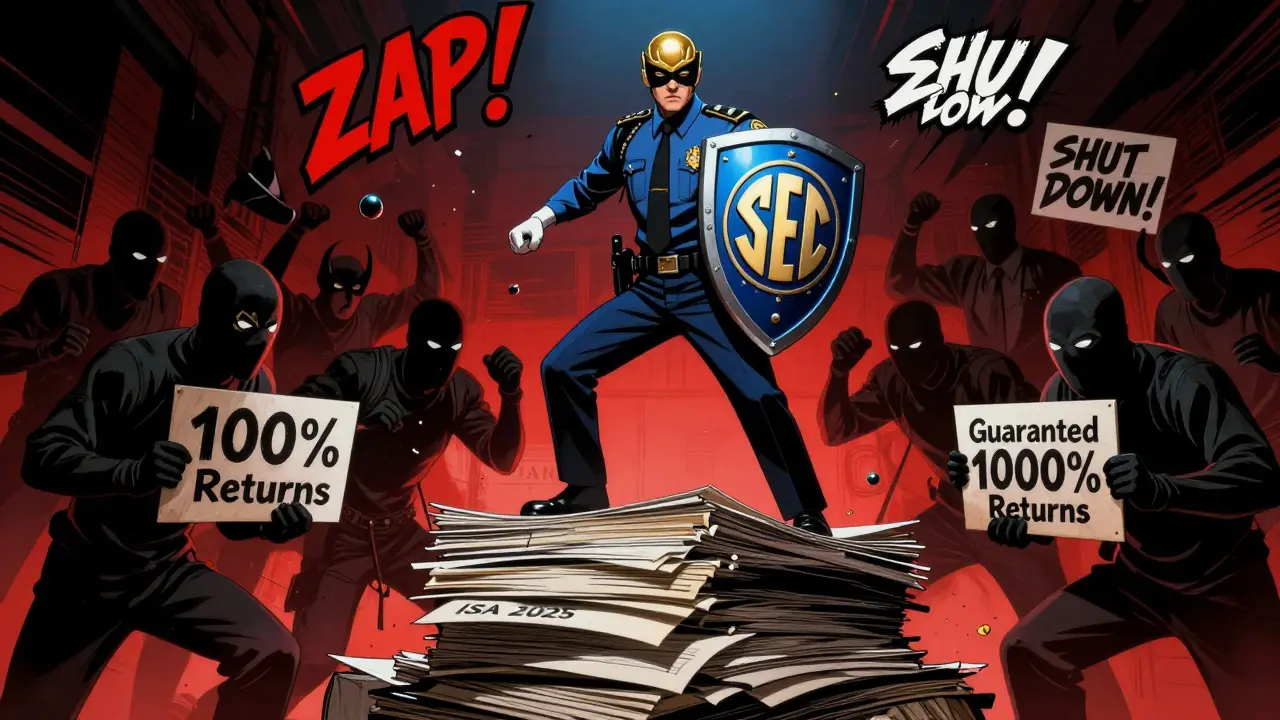
What Happens If You Don’t Comply?
The penalties are serious. If a crypto business operates without an SEC license, they face an initial fine of ₦10 million (about $6,700). That’s not a warning-it’s a bill. Then, for every month they keep operating illegally, they’re hit with another ₦1 million ($670). After three months, that’s over $20,000 in fines alone. The SEC can also shut them down, freeze their assets, and refer them to the Economic and Financial Crimes Commission (EFCC) for criminal investigation. This isn’t just about paperwork. It’s about enforcement. And regulators are already acting. In late 2025, three unlicensed crypto firms were shut down after investigations linked them to fraudulent schemes.Taxes Are Now Official
Starting January 1, 2026, crypto profits are taxable. This is a major shift. Before, many users treated crypto like cash under the mattress-no reporting, no taxes. Now, if you sell Bitcoin for a profit, you owe tax. The rules are clear: crypto is treated as property. You don’t pay tax just for holding it. You pay when you sell, trade, or exchange it for goods, services, or naira. For individuals, the tax rate goes up to 25% on profits. Companies pay 20% if they earn between ₦25 million and ₦100 million a year, and 30% if they earn more. On top of that, any company charging fees for crypto payment processing must also pay 7.5% VAT on those fees. It’s not a heavy tax burden compared to places like the U.S. or Germany, but it’s real. And it’s now tracked through bank reporting and exchange data.Why Is Nigeria So Big in Crypto?
Nigeria isn’t just allowing crypto-it’s leading the world in usage. Between July 2024 and June 2025, Nigerians received over $92 billion in crypto value. That’s more than any other country. Why? Three reasons. First, remittances. Millions of Nigerians abroad send money home, and crypto is faster and cheaper than Western Union. Second, inflation. With the naira losing value, many see crypto as a way to save. Third, access. Over 60% of Nigerians under 35 are smartphone users, and apps like Quidax and Busha make buying crypto as easy as topping up airtime. Even during the CBN’s 2021-2023 bank ban, crypto usage kept growing. That shows real demand-not just hype.
What About Scams?
Regulators know fraud is a risk. That’s why the ISA 2025 gives them new tools. If a company claims to offer “guaranteed returns” or “double your money in 30 days,” it’s automatically flagged as a Ponzi scheme. The SEC can now request telecom records, bank logs, and user data to track illegal operators. The EFCC has been aggressive. In late 2025, they shut down a fake crypto investment platform that had tricked over 12,000 people. The founders were arrested. This isn’t about stopping crypto. It’s about cleaning up the bad actors so honest businesses can thrive.Can You Accept Crypto Payments Today?
Yes-if you’re set up right. If you’re a business owner, you can start accepting crypto payments tomorrow. But here’s how: use a licensed Nigerian provider like Quidax or Busha. They offer payment buttons, invoicing tools, and auto-conversion to naira. That way, you get paid in crypto, but your bank account gets naira. No risk. No compliance headaches. If you try to set up your own wallet and ask customers to send BTC directly? You’re operating outside the law. You could get fined. Your bank might freeze your account. And if someone disputes a transaction? You have no legal protection.What’s Next?
The system is still new. Licensing is slow. Some businesses are still adjusting. But the direction is clear: Nigeria is building a legal, transparent crypto economy. More exchanges will get licensed. More banks will integrate crypto services. More users will move from informal P2P trading to regulated platforms. The government isn’t trying to kill crypto. It’s trying to own it-and profit from it.Is it illegal to use crypto in Nigeria?
No, it’s not illegal. Crypto is not banned. Since March 2025, it’s been officially recognized as a security under the Investments and Securities Act. You can buy, sell, trade, and accept crypto payments-but only through licensed providers.
Can Nigerian banks handle crypto transactions?
Yes, but only for licensed crypto firms. The Central Bank of Nigeria reversed its 2021 ban in December 2023. Now, banks can open accounts for SEC-registered exchanges like Quidax and Busha. They cannot directly handle crypto transfers from individuals, but they can process naira deposits and withdrawals from licensed platforms.
Do I have to pay tax on my crypto profits in Nigeria?
Yes, starting January 1, 2026. The Nigerian Tax Administration Act 2025 requires individuals to pay income tax (up to 25%) on crypto profits from sales or trades. Companies pay corporate tax (20%-30%) and 7.5% VAT on transaction fees. Holding crypto without selling is not taxed.
What happens if I run a crypto business without a license?
You’ll face fines starting at ₦10 million ($6,700), plus ₦1 million ($670) per month for every month you operate illegally. The SEC can shut you down, freeze your assets, and hand your case to the EFCC for criminal prosecution. Many unlicensed firms have already been closed since late 2025.
Can I use Binance or Coinbase to accept payments in Nigeria?
You can use them to trade, but not to legally accept payments as a business. International exchanges like Binance and Coinbase have not applied for Nigerian licenses. If you’re a Nigerian business, using them to receive payments puts you at risk. The SEC only protects transactions through licensed local providers.
Are NFTs legal in Nigeria?
It depends. Investment-focused NFTs (like digital real estate or fractional ownership) are regulated as securities by the SEC and require licensing. Artistic NFTs (like digital art or collectibles) are not currently regulated unless they’re sold as investment products.
 Cryptocurrency Guides
Lorna Gornik
March 22, 2026 AT 23:28kavya barikar
March 23, 2026 AT 15:48Leona Fowler
March 25, 2026 AT 00:28Anand Makawana
March 26, 2026 AT 02:21aravindsai pandla
March 27, 2026 AT 05:05Florence Pardo
March 28, 2026 AT 19:45namrata singh
March 30, 2026 AT 14:36Andrew Midwood
March 31, 2026 AT 15:00Andrea Zaszczynski
April 1, 2026 AT 16:03DarShawn Owens
April 2, 2026 AT 14:05Andy Green
April 3, 2026 AT 05:47Zion Banks
April 4, 2026 AT 08:04Alicia Speas
April 4, 2026 AT 15:34Cordany Harper
April 6, 2026 AT 13:51