
You’ve probably heard of Dogecoin. You might even know Shiba Inu. But have you ever tried to buy a token so small that the price difference between two major exchanges could make or break your trade? That’s the reality for Gui Inu (GUI), an unofficial community-driven meme token on the Aptos blockchain. If you’re seeing this ticker pop up in your portfolio tracker and wondering if it’s the next big thing or just noise, you’re asking the right question.
Gui Inu isn’t backed by a massive corporate team or a flashy whitepaper full of complex technical jargon. It’s a project born from anonymous community efforts, launched back in 2022 with a simple goal: create a fun, engaging space for Aptos users. But as we look at its performance today, in August 2026, things get a bit more complicated. The token has seen significant volatility, sitting far below its all-time highs and struggling with liquidity issues that can trap investors. This guide breaks down exactly what Gui Inu is, how it works, and whether it fits into your risk profile.
Key Takeaways
- Community-First, No Founders: Gui Inu was created by an anonymous group with no official development team, relying entirely on community grants and social engagement.
- Aptos-Native Asset: Unlike many multi-chain memes, GUI exists solely on the Aptos blockchain using the Move programming language, limiting its cross-chain utility.
- Extreme Volatility & Liquidity Risks: With a market cap under $3 million and wide bid-ask spreads, trading large amounts often results in significant slippage.
- Price Discrepancies: Data shows huge differences in reported prices across exchanges like CoinGecko and CoinMarketCap, signaling thin order books.
- Speculative Nature: Current analysis places GUI in the "extreme risk" category, with minimal real-world utility beyond speculation.
The Origins of Gui Inu on Aptos
To understand Gui Inu, you first need to understand where it lives. It resides on the Aptos blockchain, a Layer 1 network designed for high throughput and safety using the Move programming language. Launched in 2022, Gui Inu emerged during a wave of meme coin proliferation that followed the broader crypto bull run. Unlike Bitcoin or Ethereum, which were built to solve specific technological problems, Gui Inu was built to solve a social one: boredom.
The creators remain anonymous. There is no CEO, no CTO, and no venture capital firm backing the project. Instead, the token operates through a system of community grants. The idea is that holders vote on or propose initiatives that bring "fun vibes, high engagement, and camaraderie" to the ecosystem. This decentralized approach sounds idealistic, but in practice, it means there is no central authority to steer the ship when markets turn rough. When the hype fades, who keeps the lights on? For Gui Inu, the answer is usually just the remaining enthusiastic members of its Telegram and Discord groups.
Tokenomics: Supply and Market Cap Reality
Let’s talk numbers, because they tell a stark story. Gui Inu has a fixed total supply of 777,777,777,777 tokens. This number is intentional, playing on the cultural significance of "777" as a lucky symbol. As of early 2026 data, approximately 560 billion of these tokens are in circulation. That leaves a significant portion locked or held by early adopters, creating potential sell pressure if those whales decide to exit.
| Metric | Value / Status | Implication for Investors |
|---|---|---|
| Total Supply | 777.7 Billion Tokens | Fixed supply prevents inflation but creates a massive unit count. |
| Circulating Supply | ~560 Billion Tokens | Roughly 72% of supply is active; rest is reserved or locked. |
| All-Time High (ATH) | $0.0001012 (March 2024) | Current price is ~96% below peak, indicating deep correction. |
| Market Rank | #3096 (CoinGecko) | Micro-cap status implies extreme sensitivity to news. |
| Primary Chain | Aptos | Limited interoperability compared to ETH-based memes. |
The market capitalization fluctuates wildly depending on which exchange you check. On some platforms, it hovers around $2.1 million, while others report figures closer to $500,000. This discrepancy isn’t just a glitch; it’s a symptom of low liquidity. When there aren’t enough buyers and sellers, a single large trade can swing the average price dramatically. If you see a price on CoinGecko that looks too good to be true, verify it against the actual volume before hitting buy.
Utility or Just Vibes?
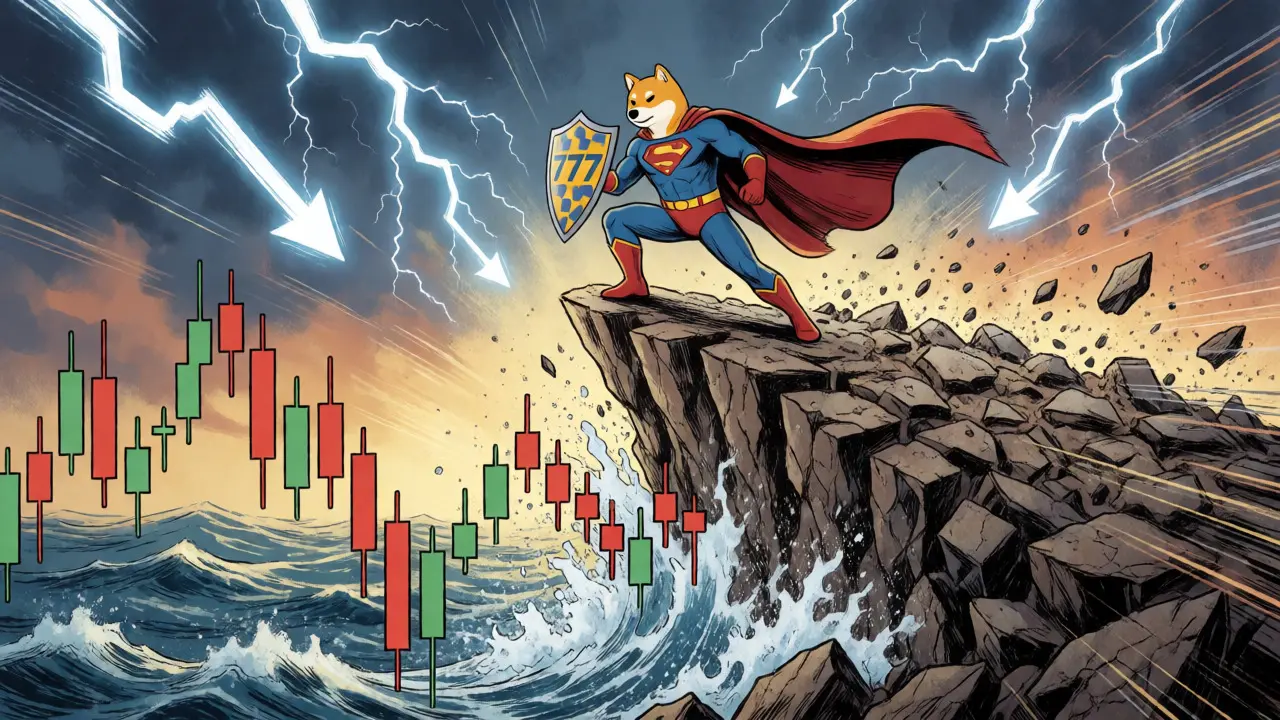
Here is the uncomfortable truth about most micro-cap meme coins: they rarely have utility. Gui Inu is no exception. While projects like Uniswap offer decentralized trading or Aave offers lending, Gui Inu’s primary function is speculative trading and community participation. The documentation provided by exchanges like MEXC describes the project’s culture rather than its technology. They talk about "camaraderie" and "fun," not smart contract innovations or unique consensus mechanisms.
Does this mean it’s worthless? Not necessarily. Value in crypto is often driven by attention and community strength. The GUI community maintains an active presence on social media, albeit smaller than giants like DOGE. However, without a clear roadmap or tangible product updates-such as a new NFT collection, a gaming integration, or a DeFi protocol-the value proposition relies heavily on sentiment. If the meme cycle turns cold, there is little fundamental support to hold the price up.
The Liquidity Trap: Trading Risks Explained
If you plan to invest, you must understand the mechanics of trading a micro-cap asset. Liquidity refers to how easily you can buy or sell an asset without affecting its price. For Gui Inu, liquidity is thin. Imagine trying to sell 10 billion GUI tokens. Because the order book is shallow, you might only find buyers for 2 billion at the current price. To sell the rest, you’d have to accept progressively lower prices, resulting in "slippage." One trader reported losing 15% on their exit simply because there weren’t enough bids.
Furthermore, wallet compatibility is a hurdle. Since GUI is native to Aptos, you cannot use standard Ethereum wallets like MetaMask directly without bridging or specific Aptos-compatible wallets like Petra or Pontem. Newcomers often struggle with this setup, leading to failed transactions or lost funds. Always test with a small amount first. The transaction times can also lag behind major chains due to network congestion or low validator activity, sometimes taking minutes rather than seconds.
How Gui Inu Compares to Other Meme Coins
When you stack Gui Inu against established players, the gaps become obvious. Dogecoin and Shiba Inu benefit from brand recognition, celebrity endorsements (like Elon Musk), and integration into major payment systems. Gui Inu lacks these anchors. It competes within the Aptos ecosystem, which itself holds less than 0.2% of the total Layer 1 market share. This niche positioning means GUI is fighting for attention in a crowded room where everyone else has a megaphone.
Consider the risk profile. Analysts categorize tokens with market caps below $5 million as "high-risk speculative assets." A study by MIT blockchain researchers noted that anonymous teams in this bracket account for nearly 80% of rug pulls. While there is no evidence of a scam in Gui Inu’s case, the lack of transparency increases uncertainty. If the core community members lose interest, there is no institutional backbone to sustain the project.
Should You Buy Gui Inu?
This depends entirely on your risk tolerance. If you are looking for a stable store of value, Gui Inu is likely not it. Its price has declined significantly over the past year, dropping over 60% year-over-year despite occasional monthly rebounds. The token trades in a narrow band, showing little momentum. However, for traders who thrive on volatility and enjoy the social aspect of holding a small-cap coin, GUI offers a low entry point. You can buy hundreds of thousands of tokens for a few dollars.
Before buying, ask yourself three questions: 1. Can I afford to lose 100% of this investment? 2. Do I understand how to move funds onto the Aptos network? 3. Am I comfortable with potentially illiquid positions where exiting takes time?
If you answered yes to all three, Gui Inu might be a fun addition to a diversified portfolio. If you hesitated on any, stick to larger caps until the project demonstrates clearer development or increased adoption.
Frequently Asked Questions
Is Gui Inu a legitimate project or a scam?
Gui Inu is generally considered a legitimate community-driven project rather than an outright scam, as it has been listed on reputable exchanges like Coinbase and Binance. However, it carries high risks due to its anonymous development team, lack of formal whitepaper, and low liquidity. Investors should treat it as a speculative asset with no guaranteed returns.
Which blockchain does Gui Inu run on?
Gui Inu operates exclusively on the Aptos blockchain. It is not compatible with Ethereum, Solana, or other networks unless bridged, though native functionality is limited to Aptos. This requires users to have an Aptos-compatible wallet such as Petra or Pontem.
Why is the price of GUI different on various exchanges?
Price discrepancies occur due to low liquidity and fragmented trading volumes. Because Gui Inu is a micro-cap token, order books are thin. Large buy or sell orders on one exchange can skew the average price significantly compared to another platform with different trading activity levels.
Can I stake Gui Inu for rewards?
Currently, there is no widely adopted staking mechanism for Gui Inu that generates passive income comparable to proof-of-stake coins. The token primarily functions as a speculative asset and community governance tool, with rewards largely dependent on market appreciation rather than yield farming protocols.
What is the maximum supply of Gui Inu?
The maximum and total supply of Gui Inu is fixed at 777,777,777,777 tokens. This cap ensures that no new tokens will be minted, theoretically protecting against inflation, though it does not prevent price drops caused by selling pressure.
 Cryptocurrency Guides