
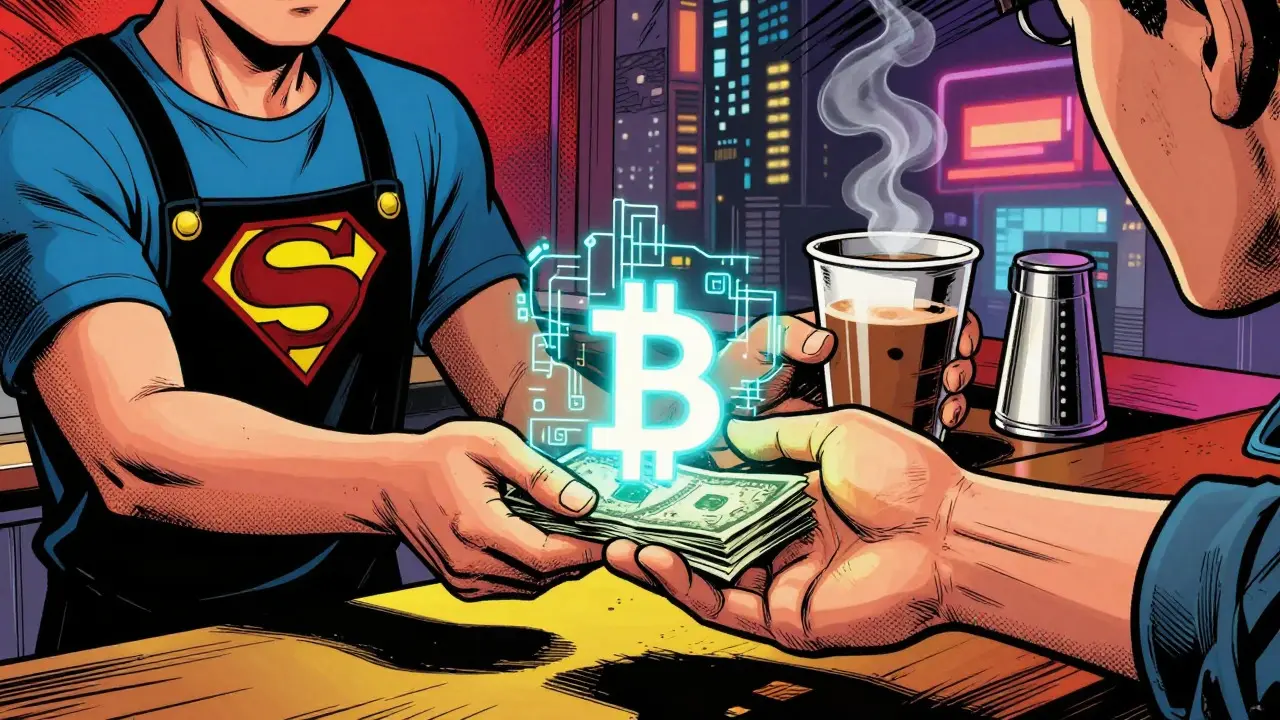
Imagine buying a coffee with a piece of code instead of cash or a credit card. That is the promise behind payment cryptocurrencies. These are digital assets designed specifically to move money from one person to another without needing a bank in the middle. While many people think of crypto only as an investment vehicle for getting rich quick, payment coins serve a different purpose: they act as digital cash.
If you have ever sent money internationally, you know it takes days and costs a fortune in fees. Payment cryptocurrencies aim to fix that. They use blockchain technology-a public ledger that records every transaction-to ensure security and speed. But not all cryptos are built for spending. Some are meant for building apps, while others are pure currency. Understanding the difference is key if you want to use them effectively.
The Core Purpose: Moving Value, Not Just Storing It
Payment cryptocurrencies are digital currencies primarily designed to facilitate transactions between individuals and merchants. Their main job is simple: transfer value. When you send Bitcoin (BTC) to a friend, you are using it as intended by its creator, Satoshi Nakamoto. The goal was to create a peer-to-peer electronic cash system.
This differs sharply from utility tokens. For example, Ethereum’s native token, Ether (ETH), is often used to pay for computing power on the network to run smart contracts. While you can spend ETH, its primary design is fuel for a machine. Payment coins like Bitcoin or Litecoin are designed to be the product itself-the money you hold in your pocket.
- Medium of Exchange: Used to buy goods and services directly.
- Store of Value: Holds purchasing power over time (though this varies wildly).
- No Intermediaries: Transactions happen directly between users, bypassing banks.
Top Examples of Payment Cryptocurrencies
Not all payment coins are created equal. Each has unique features regarding speed, cost, and privacy. Here are the most prominent ones you should know about in 2026.
| Coin | Ticker | Key Feature | Transaction Speed | Privacy Level |
|---|---|---|---|---|
| Bitcoin | BTC | Digital Gold / First Mover | ~10 minutes | Pseudonymous |
| Litecoin | LTC | Faster & Cheaper Alternative | ~2.5 minutes | Pseudonymous |
| Monero | XMR | High Privacy & Anonymity | ~2 minutes | Private |
| Dogecoin | DOGE | Low Fees & Community Driven | ~1 minute | Pseudonymous |
Bitcoin (BTC): The Original
Launched in 2009, Bitcoin remains the king of payment cryptocurrencies. It has a capped supply of 21 million coins, which makes it deflationary. This scarcity appeals to investors who see it as "digital gold." However, for everyday payments, Bitcoin can be slow and expensive during network congestion. Many users now rely on the Lightning Network, a second-layer solution, to make instant, near-free micro-transactions.
Litecoin (LTC): The Silver to Bitcoin's Gold
Created by Charlie Lee, Litecoin was engineered specifically to address Bitcoin’s speed issues. It uses a different hashing algorithm (Scrypt) and confirms blocks every 2.5 minutes compared to Bitcoin’s 10. This makes it faster and cheaper to send small amounts of money. It is widely accepted by merchants who want crypto payments without the high fees of BTC.
Monero (XMR): The Private Option
If Bitcoin is like a glass wallet where everyone can see your balance, Monero is a opaque envelope. It uses ring signatures and stealth addresses to hide the sender, receiver, and amount. For those concerned about financial privacy, XMR is the top choice. However, this privacy comes with regulatory scrutiny, leading some exchanges to delist it.
Dogecoin (DOGE): The Meme That Works
Started as a joke in 2013, Dogecoin has evolved into a serious payment tool. Because it has no supply cap and low transaction fees, it is popular for tipping online content creators and small purchases. Its fast block times make it practical for daily use, despite its humorous origins.
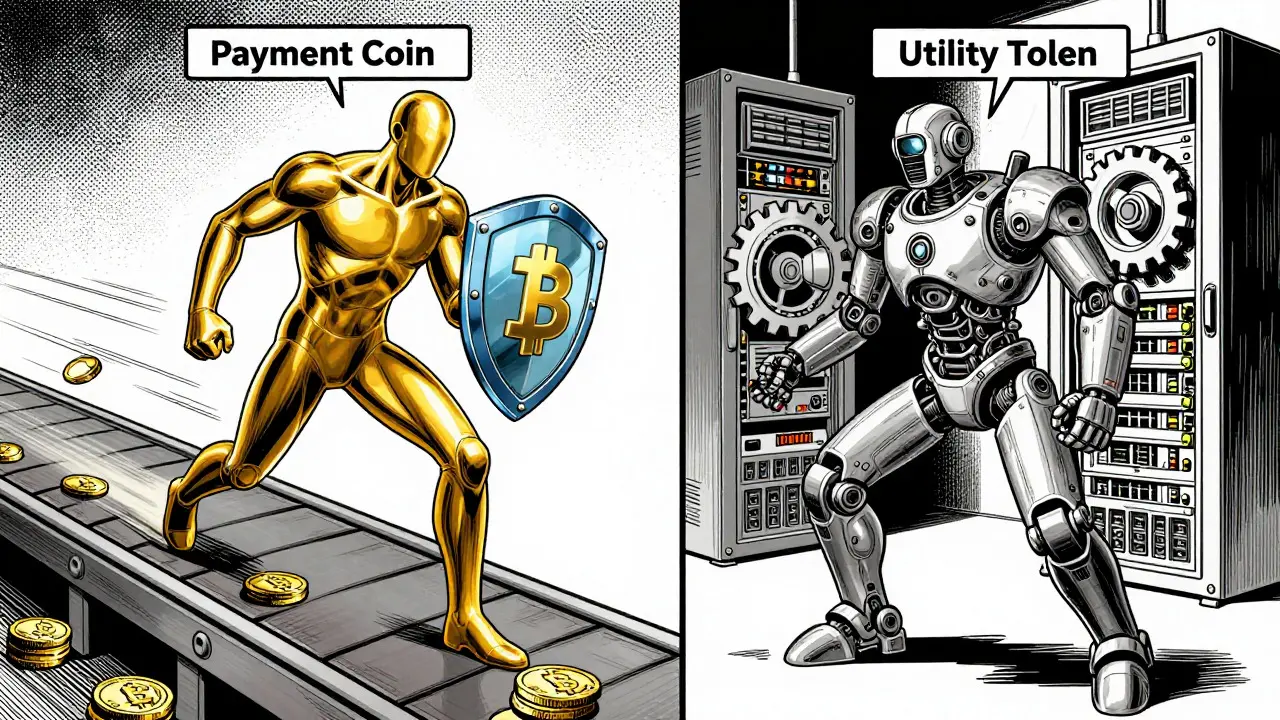
How Payment Crypto Differs from Utility Tokens
To understand payment cryptocurrencies, you must distinguish them from utility tokens. The Corporate Finance Institute highlights this distinction clearly. Utility tokens grant access to a service or product on a specific platform. For instance, Filecoin (FIL) lets you rent storage space. If the platform fails, the token loses value.
Payment cryptocurrencies, however, derive their value from network consensus and scarcity. They are not tied to a single company’s success. Instead, they function as independent monetary systems. This independence is why Bitcoin survives market crashes that wipe out smaller utility projects.
Pros and Cons of Using Crypto for Payments
Why would you use crypto to buy groceries? And why wouldn't you? Let’s look at the real-world trade-offs.
The Advantages
- Lower Fees: Sending $100 via traditional wire transfer might cost $25. With Litecoin or Dogecoin, the fee could be less than a cent.
- Speed: Cross-border payments that take three days with banks can settle in minutes with crypto.
- Accessibility: Anyone with a smartphone and internet can send money, even if they lack a bank account.
- Security: Blockchain transactions are immutable. Once confirmed, they cannot be reversed or forged.
The Challenges
- Volatility: The price of Bitcoin can swing 10% in a day. Merchants hate this because they might receive payment worth $100 today but only $90 tomorrow.
- Complexity: Managing private keys and wallets is risky. Lose your seed phrase, and your money is gone forever.
- Regulatory Uncertainty: Governments are still figuring out how to tax and regulate crypto. This creates friction for businesses.
- Limited Acceptance: You still can’t pay your electric bill with Monero in most places.

How to Start Using Payment Cryptocurrencies
Ready to try it? Here is a step-by-step guide to making your first crypto payment safely.
- Choose a Wallet: Download a reputable non-custodial wallet like Trust Wallet or Exodus. Non-custodial means you control your keys, not a company.
- Buy Crypto: Use a centralized exchange like Coinbase or Kraken to buy BTC, LTC, or DOGE with fiat currency (USD, NZD, etc.). Transfer it to your personal wallet.
- Verify the Address: Always double-check the recipient’s wallet address. One wrong character means lost funds.
- Send Small Amounts First: Test the process with a tiny amount to ensure everything works before sending larger sums.
- Monitor Gas Fees: Check current network fees. If Bitcoin is congested, wait or switch to a cheaper coin like Litecoin.
The Future of Digital Payments
In 2026, the landscape is shifting. Central Bank Digital Currencies (CBDCs) are emerging in several countries, offering state-backed digital cash. Meanwhile, private payment cryptocurrencies are focusing on scalability. Layer-2 solutions like the Lightning Network for Bitcoin and various rollups for other chains are solving the speed and cost issues.
While crypto may not replace Visa overnight, it is carving out niches. Remittances, freelance payments, and online micro-transactions are seeing significant adoption. As regulations clarify and user interfaces become simpler, more people will likely treat payment cryptocurrencies as a viable alternative to traditional banking.
Is Bitcoin considered a payment cryptocurrency?
Yes, Bitcoin is the original payment cryptocurrency. Although many view it as a store of value (digital gold), its primary protocol is designed for peer-to-peer electronic cash transfers. With the Lightning Network, it has become much more practical for everyday small payments.
What is the difference between a payment coin and a utility token?
A payment coin (like Bitcoin or Litecoin) is designed to transfer value and act as money. A utility token (like Ethereum's ETH or Filecoin's FIL) grants access to a specific service or platform. Payment coins derive value from network consensus and scarcity, while utility tokens depend on the usage of their underlying platform.
Are payment cryptocurrencies safe to use?
The blockchain technology itself is highly secure and resistant to fraud. However, user error is the biggest risk. If you lose your private keys or send funds to the wrong address, recovery is nearly impossible. Additionally, price volatility poses a financial risk for both senders and receivers.
Which payment cryptocurrency has the lowest fees?
Generally, Litecoin (LTC), Dogecoin (DOGE), and Tron (TRX) offer very low transaction fees, often fractions of a cent. Bitcoin fees can vary significantly based on network congestion, though using the Lightning Network can reduce costs dramatically.
Can I use payment cryptocurrencies for online shopping?
Yes, an increasing number of online merchants accept payment cryptocurrencies. Large retailers like Overstock and Newegg have accepted Bitcoin for years. Many travel agencies, software companies, and e-commerce platforms also support crypto payments through processors like BitPay or CoinGate.
 Cryptocurrency Guides