

Imagine receiving a friendly message from someone you’ve been chatting with for weeks. They seem perfect-kind, interested in your life, and eager to build a future together. Then, they mention a small secret: a cryptocurrency investment platform that’s making them rich. They promise you can join them. You invest $5,000. Then $10,000. Suddenly, the account freezes. The person disappears. By the time you realize it was a lie, the money is gone, likely sitting in a digital wallet controlled by a criminal syndicate in Myanmar.
This isn’t a hypothetical scenario. It is the daily reality for thousands of Americans. In 2024 alone, these sophisticated fraud networks extracted over $10 billion from U.S. victims. That number represents a staggering 66% increase from the previous year. At the heart of this crisis is not a single hacker in a basement, but a massive, industrial-scale operation centered in the border region of Shwe Kokko, Burma. These are not just scams; they are complex enterprises protected by armed groups, fueled by forced labor, and now facing unprecedented sanctions from the U.S. government.
The Anatomy of a $10 Billion Crime Syndicate
To understand how so much money disappears, you have to look at where it goes. The epicenter of this activity is Shwe Kokko, a town near the Thai border in Myanmar. This area has become what the U.S. Treasury Department calls a "notorious hub for virtual currency investment scams." But it’s not lawless chaos; it’s organized crime with quasi-governmental protection.
The primary protector of these operations is the Karen National Army (KNA), a designated transnational criminal organization that provides security and political cover for scam centers in exchange for revenue shares. Under their umbrella, companies operate like legitimate businesses, complete with offices, servers, and HR departments. On September 9, 2025, the Office of Foreign Assets Control (OFAC) targeted this ecosystem directly, sanctioning 19 individuals and organizations. Key targets included entities like Chit Linn Myaing Co., Yatai International Holdings Group, and individual operators such as Tin Win and Saw Min Min Oo.
These sanctioned entities run sophisticated scam centers that primarily target Americans. The model relies on two pillars: technological sophistication and brutal human exploitation. The scammers use advanced social engineering techniques delivered through messaging apps and text messages. They don’t just send spam emails; they build relationships. They hire people to befriend you, learn your financial habits, and then introduce you to fraudulent cryptocurrency schemes. The result is a system that feels personal, making it incredibly hard for victims to spot the red flags until it’s too late.
How the Romance and Investment Scams Actually Work
The methodology used by these Myanmar-based networks has evolved significantly. It’s no longer about quick phishing links. It’s about patience and psychology. Here is the typical playbook:
- Targeting: Scammers identify potential victims on dating apps, social media, or professional networking sites. They create fake profiles that appear attractive, successful, and trustworthy.
- Building Trust: Over weeks or months, they engage in deep conversations. They share personal stories, ask about your dreams, and establish an emotional connection. This is often called a "romance scam" or "pig-butchering" scheme because the victim is fattened up emotionally before being slaughtered financially.
- The Pitch: Once trust is established, the scammer casually mentions their success with cryptocurrency investments. They claim to have found a loophole or a new token that is about to skyrocket. They invite you to look at their portfolio, which is entirely fabricated.
- The Trap: You are directed to a fraudulent website that looks like a legitimate exchange. You deposit funds. Initially, you might see profits and even withdraw a small amount to prove legitimacy. This encourages you to invest more.
- The Exit: When you try to withdraw larger sums, fees appear. Then technical issues. Then demands for taxes. Eventually, the platform shuts down, and your contact vanishes.
The FBI’s analysis confirms that cryptocurrency fraud surged 66% in 2024, reaching almost $10 billion in losses. Southeast Asian operations, particularly those based in Myanmar, represent the largest component of this increase. The weak regulatory environment in Myanmar allows these platforms to operate with impunity, while the proximity to major financial centers in Thailand helps launder the proceeds.
The Human Cost: Modern Slavery Behind the Screens
Behind every scam call or message is a human being who is also a victim. The business model of these operations combines high-tech fraud with low-tech brutality. Under Secretary of the Treasury John K. Hurley highlighted this dual nature, stating that the cyber scam industry "subjects thousands of people to modern slavery."
Criminal organizations recruit workers through false job advertisements promising legitimate employment in customer service, marketing, or technology roles. Young men and women from across Asia are lured with promises of high salaries and good working conditions. Once they arrive in remote border areas like Shwe Kokko, the truth hits them.
They find themselves trapped in compounds surrounded by armed guards. Their passports are confiscated. They are subjected to debt bondage schemes, where they owe money for transport, housing, and food. If they resist, they face physical violence, torture, or threats of forced prostitution. Many work 12-hour days, seven days a week, calling potential victims. If they don’t meet their quotas, they are beaten. This forced labor component elevated the international response beyond traditional financial crime enforcement to include human rights violations under Executive Order 13818.

U.S. Government Response: Sanctions and Strategy
The scale of these crimes prompted unprecedented action from the U.S. government. The September 2025 sanctions were not an isolated event but part of a comprehensive strategy involving multiple agencies. The Treasury Department utilized four distinct executive orders to target these networks:
- E.O. 13851: Targets transnational criminal organizations.
- E.O. 13694: Targets malicious cyber activities.
- E.O. 13818: Targets human rights abusers.
- E.O. 14014: Targets threats to Burma's stability.
Secretary of State Marco Rubio emphasized the targeting of American vulnerabilities, noting that "Criminal actors across Southeast Asia have increasingly exploited the vulnerabilities of Americans online." The sanctions freeze assets and block transactions with the designated individuals and entities. For example, banks and financial institutions must now screen against names like She Zhijang and Yatai International Holdings Group. If they process payments for these entities, they risk severe penalties.
This multi-vector approach reflects the complex nature of the crimes. They span financial fraud, human trafficking, organized crime, and threats to international stability. The Independent Community Bankers of America (ICBA) strongly supported these actions, endorsing the Financial Crimes Enforcement Network's proposed rules to designate Cambodia-based operations as primary money laundering concerns. However, they also warned that "more needs to be done to curtail the rapid growth of crypto scams," emphasizing the need for better information sharing with community banks.
Comparison: Myanmar vs. Other Regional Cybercrime Hubs
| Feature | Myanmar (Shwe Kokko) | Cambodia | North Korea |
|---|---|---|---|
| Primary Protector | Karen National Army (Armed Ethnic Groups) | Corrupt Local Officials / Military Regime | State Government (Lazarus Group) |
| Main Scam Type | Romance & Crypto Investment | Investment & Business Email Compromise | Hack-and-Steal & DeFi Exploits |
| Labor Model | Forced Labor / Debt Bondage | Forced Labor / Trafficking | State-Directed IT Workers |
| Sanction Status (2025) | 19 Entities/Individuals Sanctioned | 10 Entities Sanctioned | Comprehensive Sectoral Sanctions |
| Technical Sophistication | Social Engineering Focus | Mixed Social/Tech | High-Level Code Exploits |
Unlike North Korea, where the state itself runs the cybercrime units, Myanmar’s network is a hybrid criminal-military enterprise. The armed groups provide protection, while private criminal operators run the day-to-day scams. This makes it harder to target than a centralized state actor but more dangerous due to its decentralized, adaptable structure. Compared to West African romance scams, the Myanmar operations demonstrate superior technical capabilities and larger organizational structures.
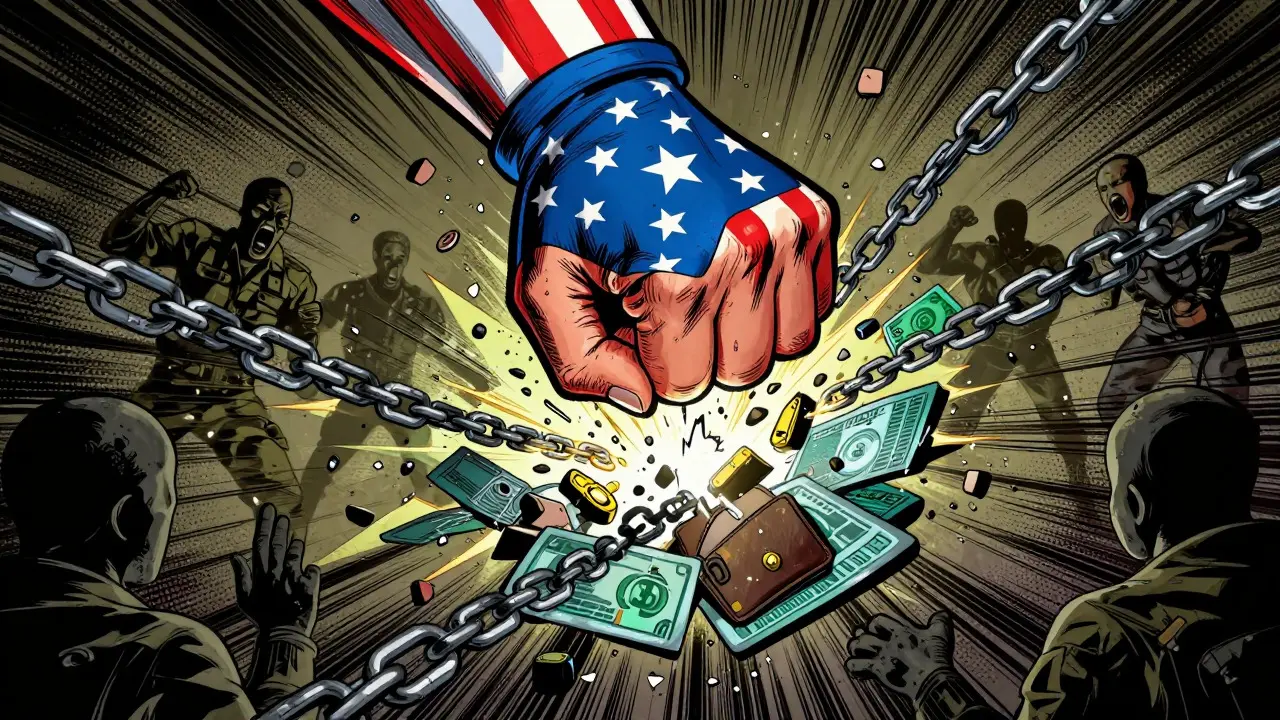
Challenges and Future Outlook
Despite the sanctions, challenges remain. The remote locations of many operations make enforcement difficult. The protection provided by armed groups means that local police often cannot intervene. Furthermore, Myanmar’s political instability following the 2021 military coup creates a vacuum that criminals exploit. The borderless nature of cryptocurrency transactions allows funds to move instantly across jurisdictions, making recovery nearly impossible once the money leaves the initial wallet.
Industry experts note that the success of these operations continues to attract additional criminal investment. Market analysis indicates that the $10 billion in 2024 American losses represents a substantial fraction of total global crypto crime proceeds. Unless there is comprehensive international cooperation, particularly with Thailand and neighboring nations, these networks will likely adapt and expand. Future developments will focus on enhanced coordination between Treasury, State Department, and FBI resources, as well as pressure on the financial infrastructure supporting these networks.
How to Protect Yourself
If you are interacting with someone online who mentions cryptocurrency investments, proceed with extreme caution. Here are practical steps to avoid becoming a victim:
- Verify Identity: If someone you met online wants to invest with you, video chat with them. Check if their profile pictures exist elsewhere on the internet using reverse image search.
- Ignore Urgency: Legitimate investments do not require immediate action. If they say the window of opportunity is closing, it’s a scam.
- Check Platforms: Ensure any exchange or platform is registered with relevant authorities (like the SEC in the U.S.). Fraudulent sites often mimic real ones with slight URL changes.
- Never Share Keys: No legitimate support staff will ever ask for your private keys or seed phrases.
- Report Suspicious Activity: Contact the FBI’s Internet Crime Complaint Center (IC3) if you suspect fraud. Early reporting can help track patterns and potentially freeze funds.
The fight against Myanmar’s crypto scam networks is ongoing. While the 2025 sanctions mark a significant step, vigilance remains the best defense for individual investors.
What is the Karen National Army's role in crypto scams?
The Karen National Army (KNA) is an armed ethnic group in Myanmar that provides protection and political cover for scam centers in the Shwe Kokko region. In exchange for security, they receive a share of the revenue generated by these criminal operations, effectively acting as a quasi-governmental force for the syndicates.
How much money did Americans lose to crypto scams in 2024?
In 2024, American victims lost over $10 billion to cryptocurrency fraud operations, representing a 66% increase from the previous year. A significant portion of these losses is attributed to networks operating out of Myanmar and other parts of Southeast Asia.
Who were the key entities sanctioned by the U.S. Treasury in 2025?
On September 9, 2025, the U.S. Treasury sanctioned 19 individuals and organizations. Key targets included Chit Linn Myaing Co., Yatai International Holdings Group, and individuals like Tin Win and Saw Min Min Oo, who operated scam centers in Shwe Kokko.
Are the workers in these scam centers volunteers?
No. Most workers are victims of human trafficking. They are recruited through false job ads promising legitimate employment. Once trapped in remote compounds, they are held via debt bondage, violence, and threats of forced prostitution, forcing them to conduct the scams under duress.
How do these scams typically start?
These scams usually begin with romance or friendship-building techniques on social media or dating apps. Scammers build trust over weeks or months before introducing a fraudulent cryptocurrency investment platform, convincing victims to deposit funds into fake exchanges.
 Cryptocurrency Guides