

Imagine earning points from your airline, your local convenience store, and your hotel stay, only to find them stuck in separate apps that never talk to each other. That is the exact problem MiL.k is trying to solve. Launched by Milk Partners Co., Ltd., a firm based in Seoul, South Korea, this platform acts as a bridge between traditional Web2 loyalty programs and the blockchain world. The native utility token, MLK (often called Milk Coin), serves as the universal currency for trading these fragmented reward points. If you have been curious about how a lifestyle app can become a mid-cap cryptocurrency asset, this guide breaks down exactly what MiL.k does, how the MLK token works, and where it stands in the market as of late August 2026.
The Core Concept: Unifying Fragmented Rewards
Most consumers hold dozens of loyalty accounts, but very few actually use all of them before the points expire. MiL.k addresses this by allowing users to link their existing loyalty accounts into a single mobile application. Once linked, you can convert brand-specific points-such as those from airlines or retailers-into MLK tokens. This conversion happens at dynamic discount rates determined by a patented algorithm that balances supply and demand across different partner brands.
The key innovation here is liquidity. In traditional systems, if you want to switch from Airline A points to Hotel B rewards, you usually need cash settlement or manual negotiation between companies. With MiL.k, you simply trade your points for MLK, then use those MLK tokens to buy rewards from any other partner in the ecosystem. This removes the need for direct cash settlements between the platform and individual service providers, making the system scalable and efficient for both users and businesses.
Tokenomics and Supply Details
Understanding the supply mechanics is crucial for anyone looking at MLK as an investment or utility asset. Data varies slightly between tracking platforms, but the general structure remains consistent. The total supply is capped at approximately 986 million MLK, with a maximum potential supply of 1.3 billion units. As of mid-2026, the circulating supply hovers around 570 million tokens, meaning roughly 41% to 44% of the maximum supply is already in the market.
The initial funding round raised approximately $13.94 million, with a private sale price of $0.104 per MLK. Since then, the token has undergone significant volatility. While early adopters saw returns exceeding 39x, the current price sits in the mid-cents range. The remaining supply is being released through a vesting schedule that extends until 2031, ensuring a controlled emission rate over the next several years rather than a sudden dump on the market.
| Metric | Value | Note |
|---|---|---|
| Total Supply | 986,245,419 MLK | Fixed cap per most trackers |
| Max Supply | 1,300,000,000 MLK | Includes future emissions |
| Circulating Supply | ~569,930,000 MLK | As of Aug 25, 2026 |
| Market Cap | ~$21.5 Million | Mid-cap classification |
| Vesting End Date | 2031 | Gradual release schedule |
Technical Architecture and Network Migration
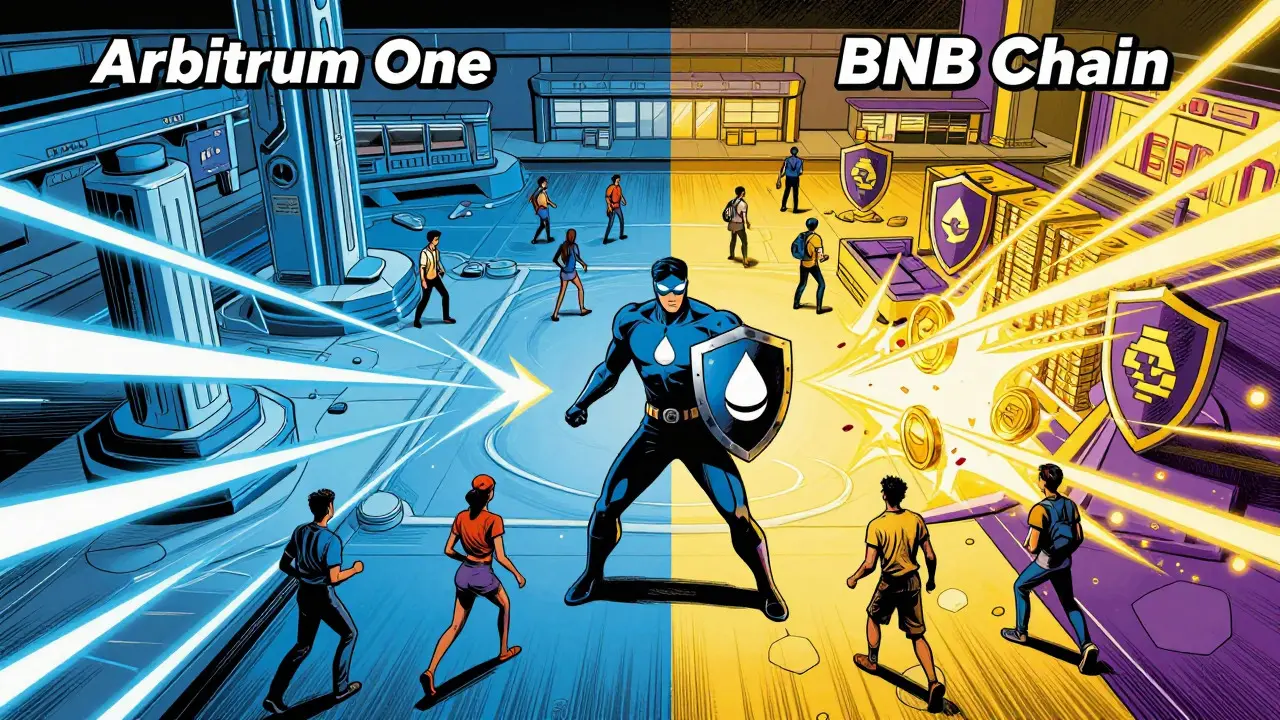
When MiL.k first launched in 2019, it was built on Hyperledger Fabric, a permissioned blockchain often used in enterprise settings. However, to tap into the broader decentralized finance (DeFi) ecosystem and reduce transaction costs, the project migrated its mainnet services to Arbitrum One. This move, completed by April 2026, allows for faster and cheaper transactions while maintaining Ethereum compatibility. For users, this means that MLK transfers and point exchanges are now processed on a Layer-2 rollup, significantly improving user experience compared to the original infrastructure.
In parallel, MiL.k expanded into the BNB Chain ecosystem with the launch of the USD1 Loyalty Hub in July 2025. This initiative introduced a fiat-backed stablecoin called USD1, creating a new way for users to earn M-USD1 Points by holding or trading specific pairs like USD1-MLK on PancakeSwap V3. This dual-chain presence on Arbitrum and BNB Chain gives MLK more flexibility and access to different user bases within the crypto space.
Major Partnerships and User Base
A loyalty token is only as good as the brands behind it. MiL.k has secured high-profile integrations that validate its utility. Early on, the platform integrated with Yanolja, one of South Korea’s fastest-growing online travel agencies, and Shinsegae Duty Free. These partnerships allowed users to trade duty-free points for MLK and vice versa, creating a seamless loop for travelers.
- AirAsia Rewards: In September 2022, MiL.k partnered with BIGLIFE to integrate AirAsia Rewards, connecting a super app with over 51 million users across Asia.
- CU Convenience Stores: Integration with BGF Retail’s CU brand enables users to earn and spend MLK at thousands of physical locations in Korea.
- Seoul Airport Limousine: Travel-focused integration for airport transfers, reinforcing the platform's core travel vertical.
By June 2024, the platform had surpassed 1.5 million users, a testament to its adoption in the Korean market and expanding Southeast Asian footprint. The user base is primarily composed of frequent travelers and retail shoppers who benefit from consolidating their scattered reward balances.
Current Market Performance and Volatility
As of August 27, 2026, MLK trades at approximately $0.038 per token, with a market capitalization ranking around #788 in the global crypto market. The 24-hour trading volume typically ranges between $2 million and $6 million, indicating moderate liquidity. While the price has dropped significantly from its all-time highs, the market cap has remained relatively stable due to the increase in circulating supply over time.
Technical indicators show mixed signals. In mid-2025, the token experienced periods of strong bullish momentum, with RSI values hitting overbought levels above 90. However, recent data suggests a more cautious outlook, with volume spikes often driven by speculative activity rather than fundamental news. Investors should be aware that MLK is subject to episodic volatility, common in mid-cap utility tokens that rely on partnership announcements for price catalysts.
User Experience and Onboarding Challenges
Despite strong technical fundamentals, the user experience has faced criticism. Reviews on Google Play show an average rating of 2.1 out of 5, with many complaints centered around identity verification (KYC) issues, such as errors when uploading passport photos during registration. For some users, resolving these issues can take days of interaction with customer support.
However, the community engagement remains active, particularly among Web3 natives. Campaigns like the MiL.k x XAI Galxe Quest have successfully mobilized thousands of participants, offering MLK rewards for social tasks and node wallet submissions. This bifurcated sentiment-frustrated mainstream app users versus enthusiastic crypto community members-highlights the challenge MiL.k faces in bridging the gap between mass-market usability and DeFi-native features.
Frequently Asked Questions
What is the primary use case for the MLK token?
MLK is the utility token used to buy, sell, and exchange loyalty points within the MiL.k platform. It acts as the medium of exchange that connects different brands, allowing users to trade points from one service provider to another without cash settlement.
Which blockchain network does MiL.k currently operate on?
The mainnet service operates on Arbitrum One, a Layer-2 solution for Ethereum. Additionally, there is a component on BNB Chain via the USD1 Loyalty Hub, which facilitates stablecoin-based rewards and trading pairs involving MLK.
How do I start using MiL.k?
You need to download the MiL.k mobile app, create an account, and complete identity verification. After that, you can link your existing loyalty accounts from partner brands like AirAsia or Shinsegae Duty Free to start converting points into MLK.
Is MLK available on major exchanges?
Yes, MLK is listed on several centralized exchanges including KuCoin, Gate.io, MEXC Global, and Binance Alpha. It also has liquidity on decentralized exchanges like PancakeSwap and Arbitrum-based DEXs.
What is the maximum supply of MLK?
The maximum supply is capped at 1.3 billion MLK tokens. The current total supply is approximately 986 million, with the remainder scheduled for release through a vesting period ending in 2031.
 Cryptocurrency Guides
Kevin Payette
August 28, 2026 AT 17:49The illusion of utility is the most potent opiate in modern finance. You present a 'bridge' but offer only a chasm dressed in neon lights. The algorithmic discount rate is merely a veil for inflationary mechanics that will bleed value from every holder who dares to trust it.
Alan Hawkins
August 29, 2026 AT 06:57Actually, the migration to Arbitrum One was a smart move. It really helps with gas fees if you are doing frequent point swaps. I have been using the app for a bit and the transaction speed is definitely better than when it was on Hyperledger. Just makes sense to be on a L2 for this kind of high-frequency utility use case.