
You’ve heard the claim: ByTrade is the “fastest-growing crypto trading platform in South Asia.” It sounds exciting. It promises easy buying, selling, and secure blockchain transfers. But here is the hard truth that most marketing blurbs skip over. When you dig into the actual data, ByTrade looks less like a rising star and more like a ghost town with a flashy sign.
As of mid-2026, there is almost no credible, independent information about this platform. No major rankings list it. No serious financial outlets have reviewed it. And crucially, nobody seems to know who actually owns it or where its legal headquarters are. If you are thinking about putting money on ByTrade, you need to understand what you are really signing up for. This isn’t just a review; it’s a risk assessment.
The Identity Crisis: Who Runs ByTrade?
In the world of finance, trust starts with transparency. You need to know who is behind the curtain. With ByTrade, a centralized cryptocurrency exchange platform claiming regional dominance in South Asia, that transparency is missing. Big exchanges like Coinbase is a publicly traded company on NASDAQ since 2021, led by CEO Brian Armstrong or Kraken is a regulated exchange founded by Jesse Powell with clear US and European registrations publish their leadership teams, incorporation details, and regulatory licenses. They want you to know they are real companies.
ByTrade does not do this. Aggregator sites like RootData and ICOholder mention the platform, but they don’t name a founder, a CEO, or a corporate entity. There is no registration number. There is no listed regulator. This is a massive red flag. Without knowing who runs the show, you have no idea who to call if things go wrong. If the site goes down, or your funds disappear, there is no legal recourse because there is no identifiable legal entity to sue.
| Feature | ByTrade | Coinbase / Kraken |
|---|---|---|
| Public Founders/Leadership | None listed | Yes (Brian Armstrong, Jesse Powell) |
| Regulatory Licenses | Unknown / None found | NYS BitLicense, MiCA compliance |
| Corporate Registration | Not disclosed | Publicly available (Delaware, USA) |
| Audited Financials | No | Yes (Quarterly reports) |
The Token Trap: Confusion Over BTT
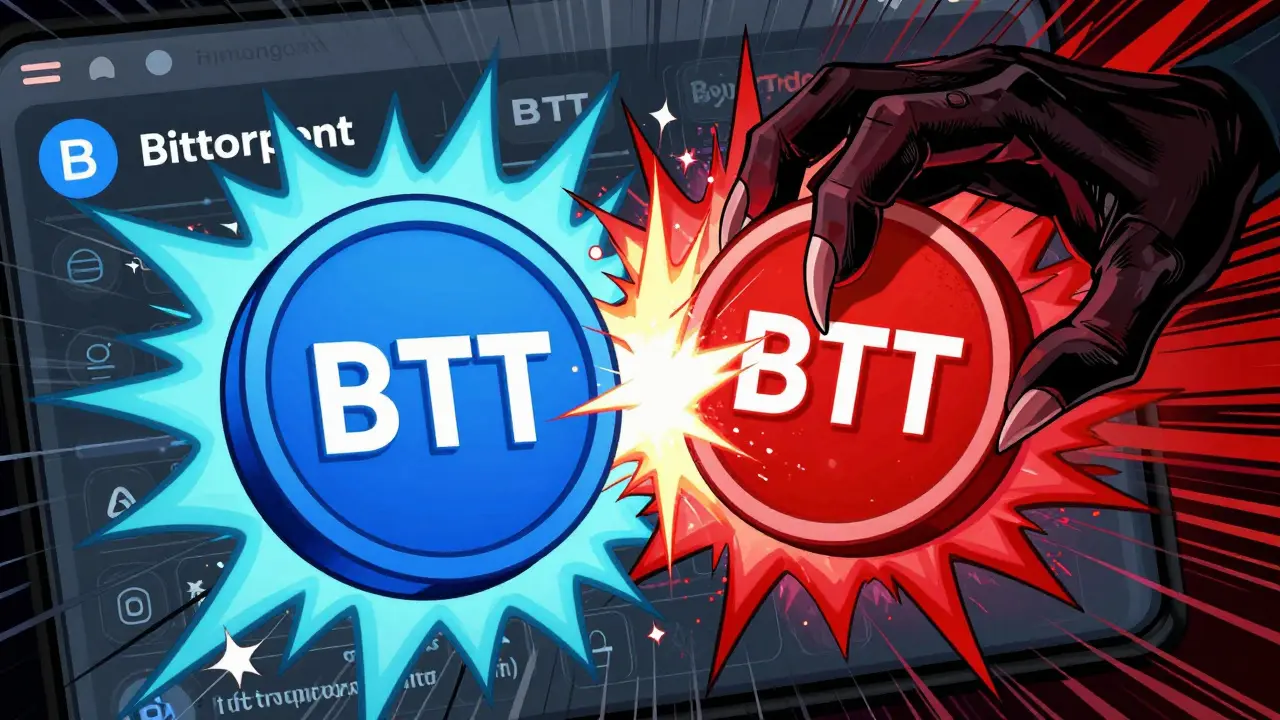
One of the most confusing aspects of ByTrade is its native token. The platform lists a token called “ByTrade (BTT).” Here is why that should make you pause. The ticker symbol BTT is already globally recognized as the symbol for BitTorrent Token, a utility token launched by BitTorrent Foundation and TRON in 2019. Using the same ticker creates immediate confusion in wallets and on block explorers. Are you holding BitTorrent’s token or ByTrade’s? It’s unclear.
Even worse, there is no transparent tokenomics for ByTrade’s BTT. We don’t know the total supply. We don’t know how many tokens the founders hold. We don’t know if there are lock-up periods. Compare this to BNB, the native token of Binance, which had a clear initial supply of 200 million coins with detailed burn schedules. When an exchange hides its token economics, it usually means insiders can dump huge amounts of tokens on retail investors at any time, crashing the price. That is a classic pump-and-dump setup.
Security and Custody: Where Is Your Money?
Let’s talk about the biggest fear in crypto: losing everything. History is littered with dead exchanges. Mt. Gox lost approximately 850,000 BTC in breaches revealed in 2014. FTX collapsed in November 2022, leaving an $8 billion hole in customer balances. These weren’t small players; they were giants. If they could fail, a tiny, opaque platform like ByTrade is sitting on a powder keg.
Reputable exchanges prove they have your money through Proof of Reserves (PoR) audits. Coinbase and Kraken publish regular attestations from third-party auditors showing that user assets are backed 1:1. ByTrade has no such audits. There are no penetration test reports. There is no mention of cold storage percentages. Without these safeguards, you have to assume your funds are sitting in a hot wallet, vulnerable to hackers, or worse, being used by the operators for other purposes. In 2026, after the FTX scandal, trusting an exchange without proof of reserves is gambling, not investing.
Liquidity and Market Presence: A Ghost Town?
If an exchange is truly the “fastest-growing in South Asia,” you would see it everywhere. You would see it on CoinMarketCap’s top volume lists. You would see reviews on Trustpilot. You would see discussions on Reddit. For ByTrade, none of this exists. It is absent from major ranking sites like CoinGecko and CoinMarketCap’s trusted exchange lists. It doesn’t appear in NerdWallet’s best-of guides. It has virtually zero presence on social media platforms like X (Twitter) or Telegram.
This lack of visibility points to a critical problem: liquidity. Liquidity is the ability to buy or sell an asset quickly without moving the price. On a major exchange like Binance, you can sell $100,000 worth of Bitcoin instantly. On a thin, low-volume exchange, that same sale might crash the price by 5% because there are no buyers waiting in the order book. Trading on ByTrade likely means high slippage (you get less than the market price) and wide spreads (the difference between buy and sell prices is large). You lose money just by entering and exiting trades.
Why Should You Avoid ByTrade?
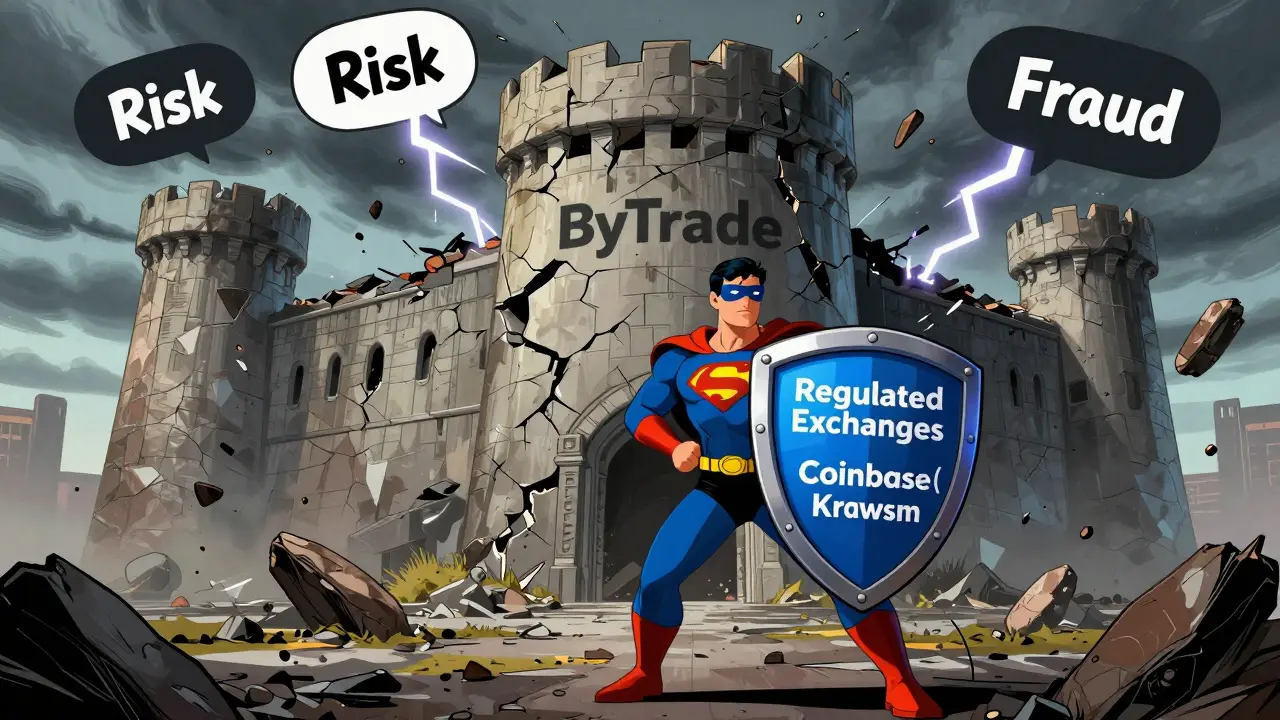
When you put all the pieces together, the picture is clear. ByTrade lacks the three pillars of a safe financial platform:
- Transparency: No known owners, no regulatory licenses, no public financial records.
- Security: No proof of reserves, no security audits, no insurance fund.
- Legitimacy: No independent reviews, no market presence, confusing token ticker.
The marketing claims are empty. “Fastest-growing” means nothing without data to back it up. In an industry where regulators in India and other South Asian countries are tightening rules (like India’s 30% tax on gains), operating in the shadows is a liability, not a feature. It suggests the platform may be trying to avoid scrutiny rather than embrace compliance.
Safer Alternatives for Traders
If you are looking for a reliable place to trade crypto, stick to platforms that have survived the scrutiny of years and billions of dollars in volume. Here are better options depending on your needs:
- For Beginners: Use Coinbase. It is regulated, easy to use, and publicly accountable. Yes, fees are higher, but you are paying for safety and simplicity.
- For Advanced Traders: Look at Kraken or Binance. They offer deep liquidity, advanced charting tools, and lower fees. Both have strong security track records (despite Binance’s past regulatory fines, it remains the largest global venue).
- For Privacy-Focused Users: Consider decentralized exchanges (DEXs) like Uniswap. You keep control of your keys, and there is no central company to hack or run away with your funds.
Remember the golden rule of crypto: Not your keys, not your coins. Even on reputable exchanges, only keep what you need for active trading online. Move long-term holdings to a hardware wallet like Ledger or Trezor.
Is ByTrade a legitimate exchange?
While ByTrade operates as a website, it lacks the hallmarks of legitimacy found in established exchanges. There is no public information about its founders, regulatory licenses, or corporate structure. This opacity makes it impossible to verify its legitimacy, placing it in a high-risk category compared to regulated platforms like Coinbase or Kraken.
What is the ByTrade BTT token?
ByTrade lists a native token with the ticker BTT. However, this causes significant confusion because BTT is also the ticker for BitTorrent Token, a well-known project by TRON. There is no transparent tokenomics data for ByTrade’s version of BTT, meaning users do not know the total supply or insider holdings, which poses a high risk of manipulation.
Does ByTrade have proof of reserves?
No. As of 2026, there are no public records of ByTrade undergoing third-party audits or publishing proof of reserves. Without this verification, users cannot confirm that the exchange actually holds the assets they deposit, creating a substantial custodial risk.
Why is ByTrade not on CoinMarketCap rankings?
CoinMarketCap and CoinGecko rank exchanges based on verified volume, trust scores, and user activity. ByTrade’s absence from these lists suggests it has very low trading volume and lacks the necessary data verification to be considered a top-tier or even mid-tier global exchange. This indicates poor liquidity and limited market presence.
Is it safe to deposit money on ByTrade?
It is not recommended. Due to the lack of regulatory oversight, unknown ownership, and absence of security audits, depositing funds on ByTrade carries a high risk of loss. Experts advise using only regulated, transparent exchanges with proven security tracks for any significant amount of capital.
 Cryptocurrency Guides